

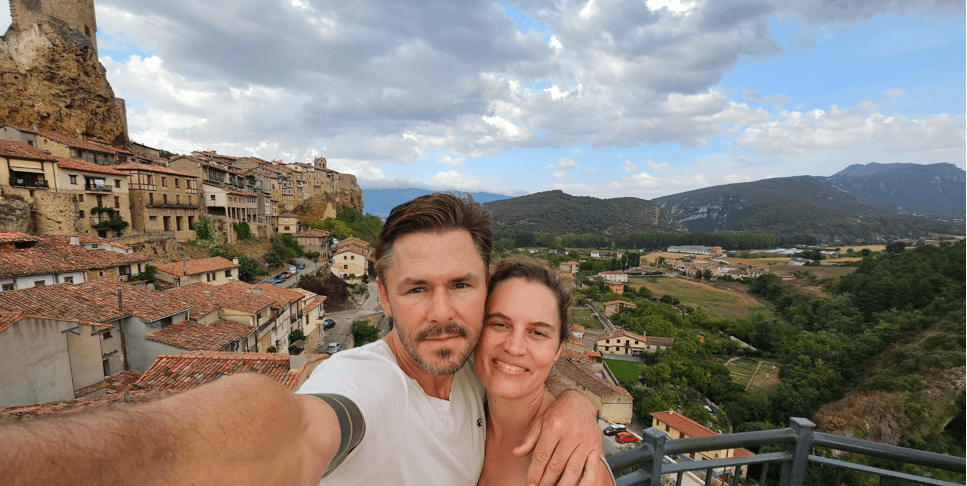
There’s a moment somewhere on Spain’s northern Atlantic coast when vanlife suddenly starts making complete sense. Maybe it happens while waking up beside empty cliffs in Galicia with fog drifting over the ocean. Maybe it happens during a slow breakfast parked above the Mediterranean outside Valencia. Or maybe it’s somewhere deep in Andalusia where warm evening air moves through olive groves while the last light hits whitewashed villages.
Driving the Spanish Peninsula anticlockwise from Barcelona isn’t just another road trip. It’s one of Europe’s most rewarding long-distance vanlife routes. The landscapes change constantly. Mediterranean beaches become rugged mountains. Surf towns turn into medieval villages. Dry southern deserts eventually give way to green Atlantic coastlines before the journey circles back east again.
What makes Spain ideal for vanlife isn’t only the scenery. It’s the rhythm. Long lunches, late sunsets, inexpensive local food, relaxed village life, scenic coastal roads, and the freedom to stop almost anywhere combine into a style of travel that feels deeply human.
And once you start driving, it becomes surprisingly difficult to stop.
In a Nutshell
- Discover the best anticlockwise vanlife route around the Spanish Peninsula starting from Barcelona.
- Explore Mediterranean beaches, Atlantic surf towns, mountain villages, wine regions, and hidden coastal roads.
- Learn practical vanlife tips for overnight parking, budgeting, route planning, and avoiding common mistakes.
- Find authentic food experiences, scenic campsites, local restaurants, and unforgettable slow-travel stops.
- Get detailed advice for planning a realistic long-distance Spanish road trip without rushing the experience.
How Long Is This Read?
Around 22 minutes.
Why Spain Is Perfect for Vanlife
Spain feels almost designed for vanlife.

The country combines incredible road infrastructure with dramatic landscape variety, affordable travel costs compared to much of Western Europe, and a slower pace of life that naturally suits long road trips.
Within a single week, you can move between Mediterranean beaches, desert-like valleys, medieval cities, Atlantic surf towns, and mountain villages.
Few countries in Europe offer that level of variety while still remaining relatively easy to navigate.
Climate also plays a huge role.
Southern Spain stays warm for much of the year, making shoulder-season vanlife especially attractive.
Spring and autumn often become ideal because temperatures remain comfortable while crowds decrease dramatically.

Food culture matters too.
Spain rewards travelers who move slowly.
Small roadside restaurants, village bakeries, local markets, seaside seafood bars, and late-night tapas culture all fit naturally into vanlife rhythms.
You don’t need expensive restaurants every night.
Some of the best meals happen beside the van itself using fresh ingredients bought from tiny local shops.
Another reason Spain works so well is flexibility.
The country contains countless campsites, overnight parking options, beach areas, mountain pull-offs, and smaller villages where vanlife still feels welcomed if approached respectfully.
And perhaps most importantly, Spain never feels repetitive.
Every region has its own personality.
Its own food.
Its own atmosphere.
Its own pace.
That constant change keeps long-distance vanlife exciting even after weeks on the road.
Starting the Journey in Barcelona
Barcelona is one of Europe’s easiest and most exciting vanlife starting points.
The city combines international flight connections, rental van availability, excellent supermarkets, outdoor stores, and immediate access to coastal driving routes.
Most travelers spend at least two or three days in Barcelona before beginning the road trip.
And honestly, that’s worth doing.
The city’s energy creates the perfect contrast before settling into slower coastal rhythms.
Morning coffee in Gràcia, late evenings around El Born, beach walks along Barceloneta, and endless tapas bars make Barcelona difficult to leave.
But eventually the road pulls you south.
Starting anticlockwise means heading first down Spain’s Mediterranean coast toward Valencia and Andalusia before eventually turning north along the Atlantic side.
This direction works especially well because the landscapes gradually become wilder and greener as the trip progresses.
It creates a natural sense of evolution rather than repetition.
Leaving Barcelona itself can feel chaotic at first.
Traffic thickens around the city outskirts.
But within an hour, the Mediterranean opens beside the road while smaller coastal towns begin appearing one after another.
That’s when the road trip truly begins.
Coastal Vanlife Between Barcelona and Valencia
The stretch between Barcelona and Valencia often gets rushed by travelers trying to reach southern Spain quickly.
That’s a mistake.
This coastline hides incredible smaller towns, quiet beaches, and slower Mediterranean rhythms.
Sitges makes an excellent early stop.
The town combines beautiful beaches, relaxed nightlife, and a far calmer atmosphere than Barcelona.
Further south, Tarragona offers Roman ruins directly beside the sea.
The old town feels surprisingly authentic despite its historical importance.
Then comes the Ebro Delta.
This area feels completely different from the busy Mediterranean resorts further north.
Rice fields stretch endlessly while flamingos move through wetlands near quiet beaches.
Vanlife there feels peaceful and spacious.
Sunrises over the delta become unforgettable.
The roads along this section of coast also suit slow driving.
Small fishing villages, hidden coves, and roadside seafood restaurants appear constantly.
Some travelers end up spending nearly a week between Barcelona and Valencia without ever planning to.
That’s one of Spain’s strengths.
The best moments usually happen between the famous destinations.
Valencia and Spain’s Mediterranean Rhythm
Valencia often surprises vanlifers.
The city feels large enough to stay exciting while remaining significantly more relaxed than Barcelona or Madrid.
The old town mixes beautifully with modern architecture while beaches stretch directly beside the city.
For vanlife travelers, Valencia creates an ideal resupply stop.
The city has excellent supermarkets, laundromats, camper services, and affordable restaurants.
But it’s also worth slowing down there for several days.
The food scene alone deserves attention.
This is the birthplace of paella, and eating authentic Valencian paella near its origin feels completely different from tourist versions elsewhere.
The surrounding coastline south of Valencia also becomes increasingly scenic.
Small beach towns, orange groves, and quieter roads replace larger urban areas.
Wild camping opportunities improve too, though travelers should always respect local regulations and avoid obvious tourist beaches during peak summer.
The Mediterranean lifestyle starts revealing itself fully around this stage of the trip.
Late dinners.
Long beach evenings.
Slow mornings.
People lingering outdoors until midnight.
Vanlife naturally adapts to that rhythm.
Driving Through Andalusia in a Van
Eventually the road bends deeper into southern Spain.
Andalusia changes the atmosphere completely.
The landscapes become drier.
The sunlight sharper.
The villages brighter.
Olive groves begin covering entire hillsides while whitewashed towns appear dramatically against mountains.
Granada becomes one of the first essential stops.
Parking a van outside the city before exploring the Alhambra and old Albaicín district creates one of those unforgettable travel contrasts.
Historic Moorish architecture by day.
Quiet mountain campsites by night.
Further south, the Costa Tropical offers dramatic coastal driving.
The roads curve beside cliffs overlooking the Mediterranean while hidden beaches appear below.
Then comes Málaga.
The city has transformed enormously in recent years.
Its food scene, walkable center, and coastal atmosphere make it a strong vanlife stop.
But many travelers eventually prefer the smaller Andalusian towns nearby.
Places like Nerja, Frigiliana, or Zahara de la Sierra feel slower and more intimate.
Andalusia also introduces one of vanlife’s greatest pleasures.
Warm evenings spent outdoors.
Cooking beside olive groves while hearing distant church bells or village conversations creates a feeling difficult to replicate elsewhere.
The Magic of Cádiz and Southern Spain
By the time you reach Cádiz, the road trip starts feeling different emotionally.
The Atlantic Ocean replaces the Mediterranean.
The light changes.
The wind becomes stronger.
And Spain somehow feels even more relaxed.
Cádiz itself is extraordinary.
The ancient city sits almost entirely surrounded by water while narrow streets glow beneath golden evening light.
Seafood dominates the food scene.
Outdoor terraces stay full late into the night.
And sunsets there feel unforgettable.
The surrounding coastline becomes one of Europe’s best vanlife regions.
Tarifa attracts surfers, nomads, and long-term vanlifers from across Europe.
The atmosphere feels international yet deeply Andalusian at the same time.
Huge beaches stretch endlessly beside powerful Atlantic winds.
Further north, smaller coastal villages become quieter.
You start discovering beach parking areas where sunsets feel completely isolated despite being only short drives from towns.
Southern Spain rewards slower travel more than almost anywhere else.
Trying to rush through Andalusia usually means missing the entire atmosphere.
Portugal Detour or Continue North?
Many vanlifers face the same question near southern Spain.
Continue only around the Spanish Peninsula or briefly cross into Portugal?
Honestly, Portugal is difficult to resist.
Even short detours along the Algarve often become highlights of the trip.
But staying entirely within Spain still creates an incredible route.
The Atlantic coast north of Cádiz becomes increasingly wild and beautiful.
Fishing villages replace resort towns.
The roads grow quieter.
And the landscape slowly shifts from dry southern scenery toward greener northern climates.
Huelva often gets overlooked but creates a useful transition point.
The seafood there is excellent, and nearby natural parks offer peaceful overnight spots.
Then the road begins pulling toward Galicia.
And everything changes again.
Galicia and Spain’s Wild Atlantic Coast
Arriving in Galicia feels almost like entering another country.
The landscapes turn intensely green.
Fog rolls across hillsides.
Forests replace olive groves.
The Atlantic crashes dramatically against rocky cliffs.
And the food becomes heavier, richer, and deeply tied to the ocean.
For many vanlifers, Galicia becomes the emotional highlight of the entire Spanish Peninsula.
The atmosphere feels quieter.
More mysterious.
More connected to nature.
Tiny fishing villages line the coastline while lighthouses stand above massive cliffs.
Roads twist endlessly through forests and seaside hills.
Places like Finisterre, Muxía, and the Rías Baixas region create unforgettable drives.
Seafood dominates every menu.
Octopus, mussels, scallops, and grilled fish appear everywhere.
And unlike heavily touristed Mediterranean areas, many parts of Galicia still feel genuinely local.
Rain becomes more common too.
But strangely, that often improves the atmosphere.
Foggy mornings overlooking the Atlantic from inside a warm van become some of the trip’s strongest memories.
Northern Spain and the Green Coast
Leaving Galicia eastward, northern Spain unfolds slowly along the Bay of Biscay.
Asturias and Cantabria create one of Europe’s most underrated road trip regions.
The landscapes combine mountains, green valleys, dramatic coastlines, and tiny surf towns.
Vanlife here feels incredibly free.
There are endless scenic drives, hiking opportunities, and beach viewpoints.
Picos de Europa becomes an essential detour.
The mountains rise dramatically above green valleys while winding roads lead toward villages that feel untouched by time.
Wild horses, stone houses, and mist-covered peaks create unforgettable scenery.
Northern Spain also introduces a completely different food culture.
Cider houses, hearty stews, grilled meats, and seafood dominate local menus.
San Sebastián eventually appears further east.
And while it’s more polished and expensive than much of northern Spain, the city deserves its reputation.
The food scene alone is extraordinary.
But smaller towns nearby often create stronger vanlife experiences.
Places like Llanes, Ribadesella, or Lekeitio feel calmer and more intimate.
Driving this coastline slowly becomes addictive.
Every few kilometers reveals another beach, another cliff, another village worth stopping for.
The Basque Country Before Returning to Barcelona
The final stretch of the anticlockwise journey carries a strange emotional energy.
You begin realizing the trip is slowly ending.
The Basque Country feels like the perfect final chapter.
The landscapes remain dramatic while the culture shifts noticeably again.
Food becomes even more central.
Architecture changes.
Language changes.
And the atmosphere feels proudly distinct from the rest of Spain.
Bilbao offers a strong urban stop before returning east.
The Guggenheim transformed the city internationally, but Bilbao’s real charm comes from its old streets, bars, and riverside atmosphere.
Then eventually the Mediterranean returns.
The roads begin feeling familiar again.
The dry eastern landscapes reappear.
And Barcelona slowly approaches.
Returning there after weeks or months on the road feels completely different from arriving initially.
You understand Spain differently now.
Not as one country.
But as dozens of distinct regions stitched together by roads, food, traditions, landscapes, and radically different rhythms of life.
Vanlife Logistics in Spain
Spain remains relatively friendly for vanlife, but understanding practical realities matters.
Wild camping laws technically vary by region.
Overnight parking without visible camping behavior is often tolerated in many areas, especially outside crowded tourist zones.
But setting up chairs, tables, or awnings in prohibited areas can create problems.
Using official campsites periodically becomes important for showers, electricity, laundry, and water refills.
Fortunately, Spain has excellent campsite infrastructure.
Fuel prices fluctuate but generally remain manageable compared to some neighboring countries.
Toll roads exist in parts of Spain, though many travelers prefer scenic secondary roads anyway.
Supermarkets are excellent nationwide.
Mercadona becomes almost legendary among vanlifers because of its reliability and affordability.
Internet coverage remains surprisingly strong across most of the country too.
Even remote coastal areas often maintain decent signal.
Summer heat can become intense in southern Spain.
Travelers should plan accordingly with ventilation, water supplies, and shaded parking whenever possible.
The Best Time for a Spanish Peninsula Vanlife Trip
Spring and autumn are arguably perfect.
Temperatures stay comfortable.
Tourist crowds decrease.
And both coastal and inland regions become easier to explore.
April through June offers green landscapes, wildflowers, and pleasant weather.
September through early November creates warm seas, golden light, and quieter beaches.
Summer works well for northern Spain but can become extremely hot in Andalusia.
Winter vanlife also remains surprisingly possible in southern Spain where temperatures stay mild compared to much of Europe.
Many long-term vanlifers actually prefer wintering in Andalusia.
The flexibility of Spain’s climate becomes one of its greatest advantages.
How to Plan a Vanlife Trip Around the Spanish Peninsula
Planning a long Spanish vanlife route becomes much easier when approached step by step.
Step one is deciding how much time you realistically have.
A full anticlockwise peninsula route deserves at least four to six weeks.
Longer is even better.
Step two is choosing your season carefully.
Spring and autumn generally offer the best balance between weather and crowds.
Step three is booking your van.
Barcelona has excellent rental options ranging from basic campervans to fully equipped motorhomes.
Step four is planning only a loose route.
Overplanning destroys much of vanlife’s freedom.
Step five is researching overnight parking apps and campsite networks.
Having backup overnight options reduces stress enormously.
Step six is budgeting realistically.
Fuel, tolls, campsites, food, and occasional hotels all add up over long trips.
Step seven is packing strategically.
Lightweight clothing, good shoes, portable cooking equipment, and compact storage systems matter.
Step eight is preparing for different climates.
Northern Spain can feel cool and wet while Andalusia remains extremely hot.
Step nine is learning basic Spanish phrases.
Even simple interactions become easier.
Step ten is slowing down.
Spain rewards travelers who leave room for spontaneity.
Where to Stay During a Vanlife Trip
Even committed vanlifers occasionally want proper hotel nights.
Long hot showers, real beds, laundry access, and city-center locations become incredibly valuable during longer trips.
Barcelona offers countless options before and after the journey.
Valencia and Málaga create excellent mid-route city breaks.
Northern Spain’s rural hotels often become especially memorable.
Stone countryside guesthouses overlooking mountains or coastlines perfectly complement vanlife rhythms.
Paradores, Spain’s historic state-run hotels, also deserve attention.
Many occupy castles, monasteries, or historic buildings in incredible locations.
Splitting time occasionally between vanlife and boutique hotels creates a surprisingly balanced travel experience.
Five Best Hotels Along the Route
Hotel Casa Bonay
Located in Barcelona, this stylish boutique hotel creates an ideal starting point before beginning the road trip.
Caro Hotel Valencia
A beautifully restored luxury hotel blending history and modern design in Valencia’s old town.
Parador de Cádiz
This modern coastal hotel offers incredible Atlantic views and easy access to Cádiz’s historic center.
Hotel Marqués de Riscal
Located in Rioja’s wine country, this iconic architectural hotel creates an unforgettable inland detour.
Hotel Maria Cristina
In San Sebastián, this legendary luxury hotel perfectly captures northern Spain’s elegant coastal atmosphere.
Five Best Restaurants Along the Journey
Tickets Barcelona
Barcelona’s creative tapas culture reaches another level here with playful dishes and vibrant atmosphere.
Casa Montaña
In Valencia, this historic wine tavern serves exceptional local dishes and wines.
El Faro de Cádiz
Known for some of southern Spain’s best seafood, this Cádiz institution perfectly reflects Atlantic Andalusian cooking.
O Fragón
Located in Galicia, this outstanding seafood restaurant focuses heavily on local Atlantic ingredients.
Ganbara
One of San Sebastián’s most beloved pintxos bars, famous for mushrooms, seafood, and unforgettable flavors.
Common Mistakes Vanlifers Make in Spain
One major mistake is rushing.
Spain simply works better slowly.
Trying to cover huge distances every day quickly becomes exhausting.
Another mistake is relying entirely on famous destinations.
The smaller villages, hidden beaches, and random roadside stops often become the strongest memories.
Many travelers also underestimate summer heat.
Southern Spain can become extremely difficult for comfortable vanlife during peak July and August afternoons.
Parking irresponsibly near beaches or protected areas creates another problem.
Respecting local communities matters enormously for keeping vanlife welcomed.
Finally, some travelers overplan every stop.
The beauty of Spain lies partly in unpredictability.
A random fishing village.
A village festival.
A beach discovered accidentally.
Those moments become the real story.
Why This Route Changes People
Long vanlife journeys create a different relationship with travel.
You stop thinking only about destinations.
The road itself becomes meaningful.
Spain amplifies that feeling because the country changes so dramatically region by region.
Weeks on the road slowly reshape your sense of time.
You start caring less about schedules.
More about atmosphere.
Morning coffee overlooking cliffs.
Long lunches in forgotten villages.
Late evening walks beside beaches.
Watching landscapes shift gradually through the windshield.
The anticlockwise Spanish Peninsula route especially creates a feeling of progression.
The Mediterranean coast eases you into vanlife gently.
Andalusia intensifies the experience emotionally.
The Atlantic north becomes wilder and quieter.
And eventually returning toward Barcelona feels strangely emotional.
Not because the trip ends.
Because you realize how much happened between the beginning and the return.
Final Thoughts
Vanlife around the Spanish Peninsula isn’t simply a road trip.
It becomes a completely different rhythm of living.
You wake up beside different landscapes constantly.
You start measuring days by sunsets, markets, weather, roadside meals, and small conversations instead of schedules.
And Spain rewards that mindset beautifully.
The country offers enough variety to keep months of travel exciting while still remaining accessible and welcoming.
From Mediterranean beaches to Atlantic cliffs, from Andalusian white villages to Galicia’s foggy fishing towns, every section of the route feels distinct.
But somehow the journey still flows naturally.
That’s what makes this anticlockwise route so satisfying.
It feels like watching Spain unfold slowly layer by layer.
And perhaps most importantly, the trip teaches something many travelers eventually crave.
Not every day needs to be optimized.
Sometimes the best travel moments happen when you stop rushing toward the next destination.
A quiet roadside breakfast.
An empty beach at sunset.
A random village festival.
A conversation with another vanlifer parked beside the ocean.
Those moments become the memories that last.
And few countries in Europe deliver them quite as consistently as Spain.
Support Ian with a TIP or Donation
Like what I do? Tips and donations like yours are what keeps this site alive. Its simple and quick, and makes a big difference.Offer me a Coffee !
Why not take 30 seconds to offer me a coffee and show your appreciation. A small gesture that goes a long way!