

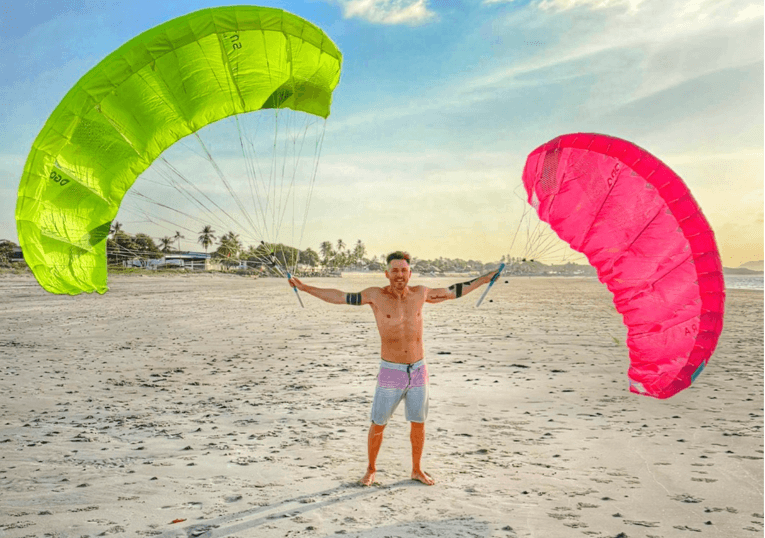
There’s a new kind of rider showing up at Punta Chame these days. They look a little different from the kiters and the wingfoilers. They’re pulling something small — impossibly small — out of a bag the size of a daypack, clipping it to a short control bar, and then, with a flick and a gust, launching themselves up onto foil and gliding across the lagoon with their hands hanging loose at their sides like they’ve been doing this for years. They haven’t, of course — nobody has, because parawinging barely existed eighteen months ago. But that’s exactly why Punta Chame right now is one of the most exciting places in the Western Hemisphere to get into it. The wind is perfect, the water is flat, the community already knows what it’s doing, and the moment you feel that compact canopy pull you up onto foil and then tuck it into a waist pouch while you drift downwind in total silence — nothing in your wind sports life will quite prepare you for what that feels like.
In a Nutshell
- Parawinging is the fastest-growing foil sport in the world right now — a compact paraglider-style canopy that gets you up on foil and then folds away so you can surf bumps hands-free — and Punta Chame’s flat lagoon and consistent dry-season winds make it one of the best places on the planet to learn it
- The wind season at Punta Chame runs from late November through early April, with January through March delivering the most consistent and reliable conditions for parawing sessions
- You’ll need some foiling or wind sports background before you start — this isn’t a sport for absolute beginners, but riders with wingfoil, kitesurf, or kiteboard experience will progress surprisingly fast in the right conditions
- Beyond the water, Punta Chame punches well above its weight for food, accommodation, and side adventures, with the added bonus of easy access to Panama City and the Caribbean
- Getting there from the US or Europe is simpler and cheaper than most comparable wind sports destinations — one connection through Panama City and you’re ninety minutes from the lagoon
Reading Time: About 18 to 20 minutes. Find a spot in the shade, pour something cold, and take your time.
What Is Parawinging and Why Is Everyone Suddenly Talking About It
The honest answer is that parawinging didn’t really exist as a defined discipline until the summer of 2024. That was when the first purpose-built parawing — the BRM Maliko — hit the market, and the foiling community collectively lost its mind. What followed was the kind of rapid adoption that only happens when a new piece of gear genuinely solves a problem that everyone had been quietly complaining about for years.
Here’s the problem it solved. Wingfoilers love the feeling of riding foil, but the inflatable wing in your hands never fully disappears. It’s always there, generating drag, demanding attention, pulling you slightly off-balance in transitions. Downwind foil surfers and SUP paddlers love riding bumps and swells with total freedom, but getting into foil without power requires either extraordinary pumping skill or very specific conditions. The parawing sits in the middle of these two disciplines and takes the best of both.
A parawing is a compact, non-inflatable canopy — think of a miniaturized paragliding wing, typically between two and six square meters — controlled by a short bar with bridles and lines, much like a small kite. It has no bladders, no pump required, and folds down into a pouch small enough to attach to your waist or tuck under your arm. You deploy it to generate the power you need to get up on foil, and once you’re flying above the water with speed, you either stow it in the waist bag and ride the bumps completely hands-free, or you keep it deployed for sustained upwind work and longer downwind runs.

The result is something that foiling veterans describe as unlike anything else they’ve tried. Getting up on foil with a parawing is fast and efficient, requiring less wind than pure pumping and less setup than a full kite. Riding with the wing stowed is genuinely one of the purest sensations in wind sports — the board hovering above the water, no drag from a wing, no lines overhead, just you and the foil and the movement of the water beneath you.
By late 2025, every major wind sports brand had either released a parawing model or announced one was coming. Duotone, GONG, ENSIS, and several others entered the category, each bringing their own take on size range, bridle setup, and construction. The sport is still evolving fast — new boards designed specifically for parawinging, foil setups optimized for the launch-and-stow style, harness systems to reduce arm fatigue — and riding it feels a little like being in on something right at the moment it’s becoming significant. That feeling doesn’t last long in wind sports. Get in now.
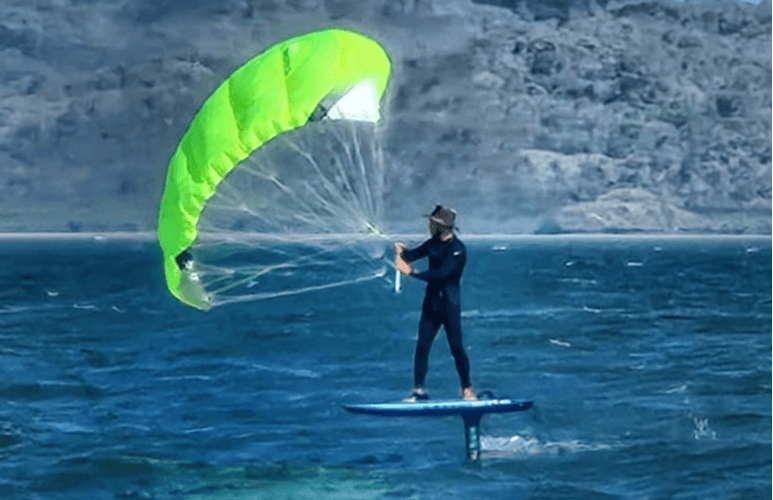
Why Punta Chame Is Made for This
Not every spot suits parawinging. Unlike kitesurfing, which has a large wind window and can function in a wide range of conditions, parawings have a narrower usable wind range — typically you need 15 to 25 knots, with the sweet spot sitting around 18 to 22 for most riders and wing sizes. Too little wind and you can’t get up on foil efficiently. Too much and the small canopy becomes difficult to handle without a harness and considerable skill.
Punta Chame, during its dry season from December through April, delivers exactly this range with an almost unsettling consistency. The trade winds pour down through the Central American isthmus and get compressed and accelerated by local thermal effects, typically filling in from the north-northwest during the late morning and building through the afternoon to settle in that 18 to 25-knot band that parawing riders dream about. It’s not a fluke — riders have been coming here for kitesurfing and wingfoiling for years precisely because the wind shows up, day after day, like something you can set your watch to.
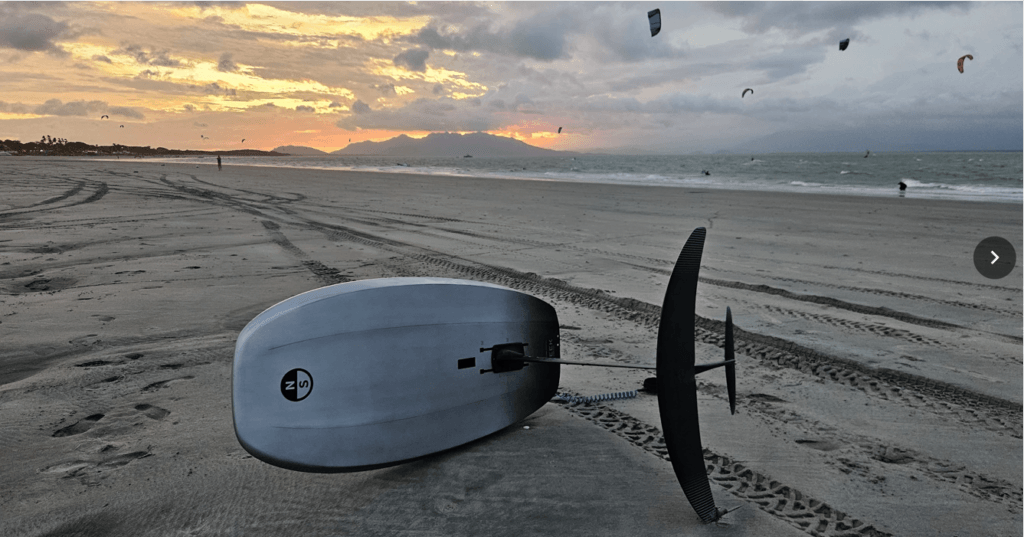
What makes it particularly well-suited to parawinging specifically is the water. The protected lagoon on the bay side of the Punta Chame peninsula is extraordinarily flat — shallow, sandy-bottomed, and sheltered from the ocean swell by the sandbars and the shape of the bay. For parawinging, flat water matters enormously in the early learning stages. Getting up on foil for the first time with a parawing requires timing the canopy deployment with your board speed and body positioning, and doing all of that while also managing chop and waves is a lot to ask. Flat water removes one variable from the equation and lets you focus on the others.
Water temperature sits around 27 degrees Celsius during the season. The air is warm and dry, the sun is intense, and the daily rhythm of the place — sessions building through the morning, hitting their best in the early afternoon, easing off toward sunset into glassy evening conditions — is exactly what you want for maximizing water time.

January through March is the prime window. December is good but can be gustier as the wind season establishes itself. April is the tail end — still rideable but patchier, with the transition to the rainy season beginning to make itself felt. If you can get there in February, that’s the month most instructors and regular visitors point to as the most consistent, most enjoyable, and least complicated in terms of conditions.
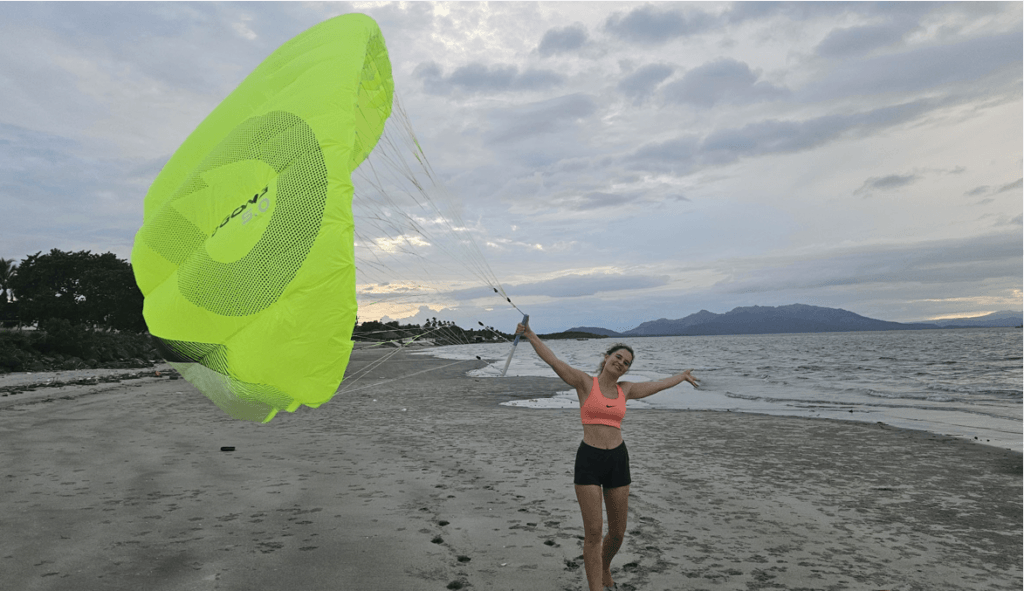
What You Need to Know Before You Go
Parawinging sits in a specific skill bracket that’s worth being honest about before you book your flights.
If you have never done any wind sports or foiling before, parawinging is not the right starting point. The canopy handling, the foil dynamics, the need to manage power while maintaining board speed and balance — there are simply too many variables for a complete beginner to handle simultaneously without a background in at least one of the component disciplines. This isn’t a knock on your ability. It’s the honest assessment that every instructor in the parawing world will give you.
If you already kitesurf, kiteboard, or wingfoil, even at an intermediate level, you’re in a much better position than you might think. Kiters will find the canopy and bar handling intuitive. Wingfoilers will find the foil dynamics familiar. The new thing to learn is the deployment-and-stow mechanics, the positioning for efficient launches, and the technique for riding bumps once the wing is packed away. With good instruction and good conditions, experienced foil riders can often be riding independently within two to three days.
If you can pump on foil — that is, if you can get your board up and sustain flight using body and board pumping alone — you’re already ahead of the curve. Parawinging becomes much more accessible when you already have the muscle memory of foil balance locked in, because the wing is then just a power source for getting into that familiar state rather than an entirely new system to learn alongside an entirely new board feel.
If none of these apply and you’re starting from scratch, the best approach is to spend the first three to four days of your trip doing a structured wingfoil beginner course. Learn to get up on foil with an inflatable wing, get comfortable with the foil dynamics, and then transition to parawing. It’s a longer total trip — call it ten days minimum — but it sets you up for success rather than frustration.
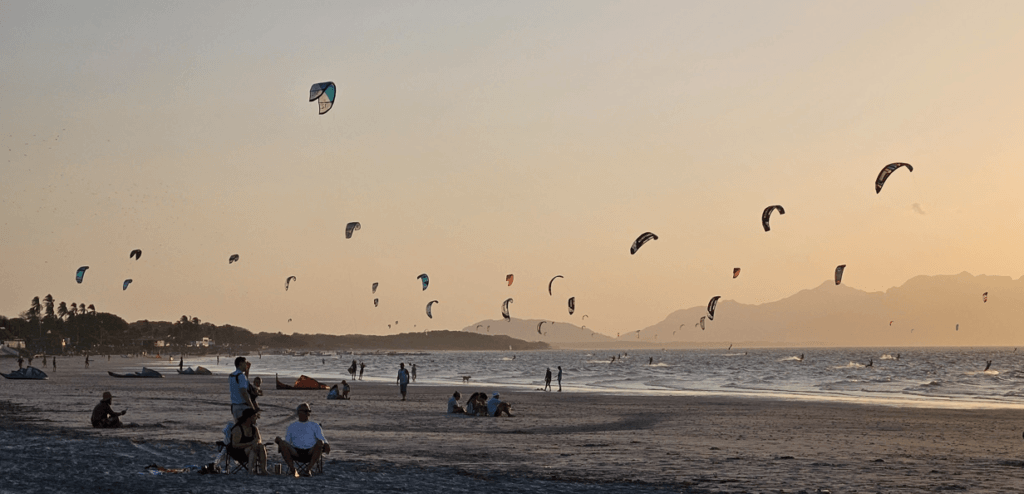
The Spots and the Sessions: What Riding Actually Looks Like Here
The primary parawing spot at Punta Chame is the flat-water lagoon that runs along the bay side of the peninsula. This is where the schools set up, where beginners make their first attempts, and where the morning and afternoon sessions play out in full view of the beach clubs and accommodations that line the waterfront.
At low tide, the lagoon becomes almost impossibly flat — a phenomenon that’s particularly pronounced around new and full moon spring tides, when the tidal range is at its maximum. These are the sessions that get talked about. Water that looks like poured glass, wind sitting steady at 20 knots, and a foil skimming above the surface with a sound like fabric in a breeze. If you happen to be at Punta Chame during a spring tide low with wind in the afternoon, you’ll understand why people book return trips before they’ve even left.
At higher tide, some chop develops, which actually benefits more experienced riders who are working on their downwind bump-riding. The small wind chop that builds across the lagoon creates exactly the kind of rolling energy that makes pack-and-stow riding worthwhile — you deploy to get up, stow the wing, and then pump and link the bumps, redeploying when you need power to get back upwind. This is the rhythm of a proper parawing session and it’s immensely satisfying once it clicks.
The wind direction at Punta Chame is predominantly north to northwest, which means it’s cross-offshore over the lagoon. Drifting downwind puts you toward the shore rather than out to open water — a critical safety factor that makes the spot welcoming for riders learning a new discipline where they might be getting pulled around by unexpected power.
Downwinder trips are available for more advanced riders who want to explore the area’s geography. The coastline along the peninsula and across to the mainland offers interesting runs in the right conditions, with different water textures and some protected sections for pumping practice. The schools and guesthouses can advise on appropriate routes and assist with boat logistics for longer sessions.
The Equipment: What You Need and Where to Get It
Parawing setups are refreshingly minimal by wind sports standards. A parawing (2m to 6m depending on your weight and wind range — most intermediate riders will want two sizes covering light and stronger conditions), a foil board, a hydrofoil, a control bar with appropriate lines, a leash, and optionally a harness for longer sessions. That’s it. No pump, no bar bag, no inflator. The whole wing fits in a bag roughly the size of a medium backpack.
Equipment quality matters enormously in this discipline because the margins are tighter than in inflatable wing riding. A well-designed canopy with clean bridles and reliable line setup makes a real difference to the handling experience. The brands that were first to market — BRM with the Maliko, GONG with the Lowkite series, ENSIS with the Roger — have established solid reputations through actual rider testing rather than just marketing. Duotone’s Stash entry has been well received for its hybrid construction that borrows from both single-skin and double-skin canopy design philosophy.
Foil setup for parawinging tends to favor larger front wings and more lift-biased configurations than what experienced kiters might ride on small waves. The goal is to generate foil flight at lower speeds, which requires more surface area and more lift. If you’re arriving with your own foil, check with the instructors before the trip about whether your current setup is appropriate or whether you’d benefit from a different configuration during your learning sessions.
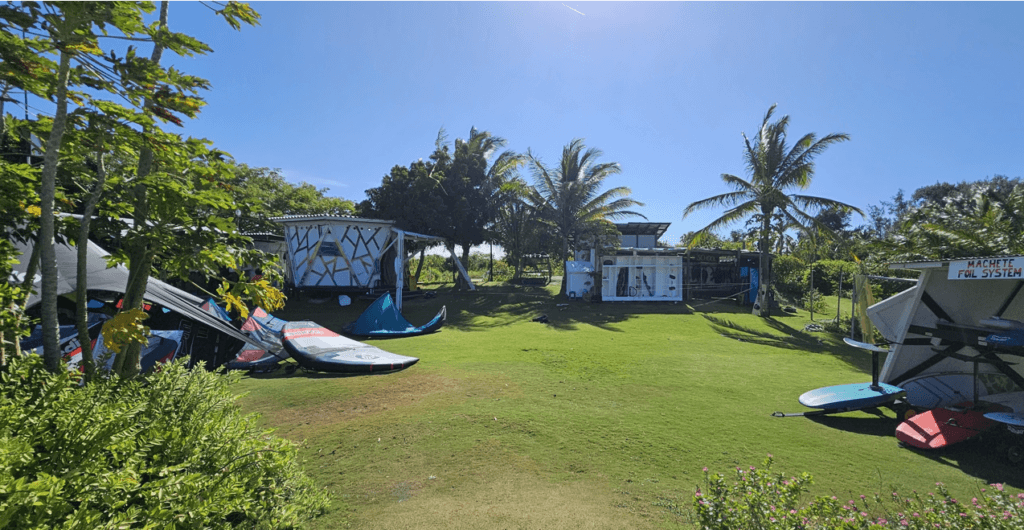
The schools at Punta Chame have been building out their parawing rental fleets as the discipline has grown. Panama Kite Center and Machete Wing Surf Kite & Foil all operate at the peninsula, and as the sport has exploded through 2025, they’ve adapted their equipment lines accordingly. Call ahead or email to confirm parawing-specific availability before your trip, as inventory can vary and popular sizes book out during peak season.
The Schools and Instruction: Who’s Teaching This Here
The Punta Chame schools have been wind sports operations for years — some for more than two decades — and their instructors have been parawinging themselves since the early adopter phase of the sport. This matters because parawing instruction is still being formalized at the global level. There’s no IKO parawing certification equivalent yet — the sport is simply too new — which means instructor quality varies significantly between destinations. At Punta Chame, you’re benefiting from instructors who have been kitesurfing, foiling, and wingfoiling professionally for years and have transitioned organically into parawing as it emerged. They know the local conditions intimately, they’ve worked through the learning curve themselves, and they can teach with the kind of contextual knowledge that only comes from having ridden a spot hundreds of times.
Machete Wing Surf Kite & Foil has been one of the most progressive operations at the peninsula for foil disciplines. Founded by Itzek and built from scratch over more than two decades, the school’s culture around new disciplines is one of enthusiastic adoption and methodical teaching. The community that forms around Machete tends to attract riders who are genuinely invested in progressing, which means the conversations on the beach between sessions are as educational as the sessions themselves. If you want to be immersed in the progression of parawinging as a culture, not just as a technical skill, Machete is the right environment.
Panama Kite Center offers the most structured and certified teaching framework of the operations at Punta Chame, being the only IKO-certified school in Panama for kite and wing disciplines. Their radio headset system — where instructors communicate with students while they’re on the water — is particularly valuable for parawing learning, because so much of the technique involves timing decisions that are hard to communicate from the beach. Real-time coaching during a deployment attempt, or feedback on your positioning during a foil exit, makes a concrete difference to how fast you progress.
Beyond the Water: What Else Is Worth Your Time
Wind sports trips have a natural rhythm — sessions in the morning and afternoon, with the hottest midday hours better spent recovering, eating, and exploring. Punta Chame is small enough that you’ll cover the obvious ground quickly, but the surrounding area offers more than you might expect.
The mangrove lagoon along the southern edge of the peninsula is beautiful in the early morning before the wind fills in. Kayaks and SUP boards are available through most of the hotels and schools, and paddling through the mangrove channels — past egrets, frigatebirds, and the occasional osprey — in a warm early morning before a session is a genuinely lovely way to spend ninety minutes.
El Valle de Antón sits about an hour’s drive inland, in the crater of an extinct volcano. It’s one of the most unusual small towns in Central America — cool, green, surrounded by dramatic volcanic ridges, with hot springs, a weekend market, botanical gardens full of orchids, and hiking trails that go up into the cloud forest. It’s a completely different world from the flat, windy coast, and spending a rest day there resets something in you.
Skydive Panama operates from the Chame area and offers tandem jumps and accelerated freefall courses for those who feel that wind sports on the water aren’t quite vertical enough. The combination of a parawing session and a tandem skydive in the same week is the kind of thing that makes for excellent conversation for years afterward.
Panama City is close enough — 90 minutes — to justify a day trip or an extra night at either end of your trip. The Casco Viejo old quarter has been beautifully restored and is now one of the best walking neighborhoods in Central America, full of good restaurants, rooftop bars, and architecture that tells the story of a city that has been a crossroads of civilizations for five hundred years. The Canal is a genuine wonder of the world that’s worth the time even if you’re skeptical going in. And the city’s food scene — driven by Panama’s position as a hub for immigrants from across Latin America, Asia, and Europe — is exceptional and largely undiscovered by the international food press.
How to Plan a Parawinging Trip to Punta Chame: Step by Step
Step one is assessing your existing skill level honestly. If you already foil independently — wingfoil, kitefoil, surf foil, it doesn’t matter which — you’re ready to focus specifically on parawinging instruction. If you’re an experienced kitesurfer who hasn’t foiled yet, plan for a few days of foil introduction before jumping into parawing. If you’re starting entirely from scratch, budget ten to twelve days minimum: three to four days learning wingfoil basics to get on foil, then another four to five days transitioning to parawinging. Email the school of your choice before you book anything and describe your background honestly. They’ll give you the right advice.
Step two is booking your school package for your target dates. Reach out directly to Machete Kite or Panama Kite Center. Most operations offer packages that bundle lessons, equipment rental, and accommodation, which is both simpler and cheaper than booking them separately. Peak weeks around Christmas, New Year, and mid-February fill up months in advance. If you’re targeting the prime February window, reach out at least three months ahead. For March or early January, two months is usually sufficient.
Step three is flights. Fly into Tocumen International Airport in Panama City (PTY). Copa Airlines runs extensive connections through Panama City from North American, South American, and European cities. From the US east coast, direct flights to PTY run around five hours from Miami and six from New York. From Europe, expect a connection, typically through Miami or Bogotá, for a total door-to-door of twelve to fourteen hours from most major cities. Try to arrive a day before your first lesson — this gives you a buffer for delays and lets your body adjust before you try to learn something that requires spatial awareness and balance.
Step four is the transfer from Panama City to Punta Chame. The peninsula is about 90 to 100 kilometers west of Tocumen, easily reached via the Pan-American Highway followed by the 15-kilometer Punta Chame access road. Fair warning about that final stretch: it’s bumpy, unpaved in sections, and best managed in a 4×4. Renting an SUV at the airport is the most flexible option — budget $35 to $55 per day for a standard 4×4 from international chains at Tocumen. Alternatively, most schools offer airport pickup transfers for an additional fee. If you’re traveling light and on a budget, public buses run from Panama City to the Chame highway junction and local taxis can cover the final stretch, though this takes significantly longer and requires some Spanish.
Step five is cash and logistics. Panama uses the US dollar, which eliminates currency headache for American travelers and simplifies things for everyone else. The peninsula is primarily cash-based — while some schools and a couple of restaurants accept cards, carrying cash is strongly recommended. Stock up at an ATM in Panama City or at the Chame town center before you turn off the highway, because ATMs on the peninsula itself are scarce. A local SIM card from Claro or Movistar (available at the airport) gives you data connectivity for Windy, WindFinder, and all the condition apps you’ll be checking obsessively for the entire trip.
Step six is packing for the conditions. Leave the wetsuit home unless you’re arriving in early December — the water is warm enough for boardshorts and a rashguard throughout the main season. Bring high-factor reef-safe sunscreen and apply it obsessively: the equatorial sun at low elevation over reflective water is intense in a way that Europeans and North Americans consistently underestimate. A windbreaker or light shell for December and January evenings is useful. Electrolyte supplements and a good reusable water bottle will make your recovery between sessions noticeably better. Download Windy and WindFinder before you leave — you’ll be using both.
Where to Stay: 5 Best Hotels and Accommodations in Punta Chame
Panama Kite Center is the most convenient option for anyone who wants to spend maximum time on the water. The accommodation ranges from air-conditioned studios to glamping tents, and all of it sits within steps of the launch zone and the lagoon. The logic of sleeping where you ride — rolling out of bed to check conditions, walking directly to the beach for a morning session, being back in the water within twenty minutes of finishing lunch — is hard to argue with when your priority is water time. The on-site Solé Beach Club handles breakfast, lunch, and dinner with ocean views. Fast WiFi is available for remote workers. Package deals bundling accommodation and lessons represent genuine value.
Machete Wing Surf Kite & Foil goes beyond what most wind sports accommodation typically offers. The place has a culture — built over more than two decades on the sand by its founder — that creates a community feel among guests that stays with people long after they’ve left. The food is consciously athletic: nourishing, varied, and genuinely good across the vegan, vegetarian, and omnivore options. The accommodations are chic without being pretentious. Massage services, a small market, pet-friendly policy, and multilingual staff round out an operation that returning guests describe as the kind of place you plan your year around getting back to.
Nomada Republic Hotel Punta Chame is a container hotel done right — stripped-back, stylish, and exactly what the younger design-conscious travel crowd wants from a beach sports destination. Pool, terrace, restaurant, bar, and solid WiFi make it highly functional, while the architecture gives it a personality that generic beach hotels lack. It’s not on the kite beach itself but is within easy reach, and the overall vibe is lively and welcoming.
Punta Chame Club and Resort is the most established resort property in the area and the right choice for travelers who want proper resort amenities alongside their adventure sports. Outdoor pool, fitness center, restaurant, bar, and concierge services make it particularly suitable for couples where one person is there to ride and the other needs entertainment options during sessions. Comfortable, reliable, and a step up in formality from the school-based accommodation options.
Hotel Casa Amarilla et Restaurant is the warmest and most characterful of the area’s budget-friendly options. The rooms are decorated with genuine care, the on-site restaurant is excellent, free bikes are available, and the staff routinely gets praised in guest reviews for going out of their way to make people feel welcome. It’s a good choice for solo travelers or small groups who want to feel like they’re staying somewhere with a personality rather than just a place to sleep.
Where to Eat: 5 Best Restaurants in and Around Punta Chame
Solé Beach Club is the undisputed leader for dining at the peninsula and one of those rare beach restaurants that would hold its own in a major city. Sitting directly at the water’s edge with a pool between the terrace and the ocean, it serves international cuisine across the full dietary spectrum — the seafood is exceptionally fresh, the vegan and vegetarian options are not afterthoughts, and the portions are calibrated for people who have been spending energy on the water all day. Come for dinner regardless of where you’re staying. The sunset from this terrace, over the bay with the mountains behind, is the kind of thing that ends up as a phone wallpaper.
Machete’s kitchen has developed a genuine following among the wind sports community at Punta Chame. The philosophy is simple: feed athletes properly, with food that’s made with care and tastes like someone thought about it. The vegetarian and vegan options are particularly strong — properly constructed dishes rather than the lettuce-and-rice afterthoughts that many beach kitchens pass off as plant-based eating. Communal dining tables mean you’ll end up in conversations with riders from four continents, which is one of the underrated pleasures of staying or eating here.
Gold Coast Brewing Company is a short drive from the peninsula and the best option for anyone who wants a proper night out after a week of beach life. Craft beers brewed on-site, excellent burgers and pub food, and a crowd that includes local expats and visiting wind sports folk who’ve decided the session debrief deserves a proper setting. It’s a reliable Friday night choice when you want something that feels like civilization.
La Cantina serves the best Mexican food in the area, full stop. The tacos are made with care, the guacamole is freshly prepared rather than scooped from a commercial tub, and the combination of heat, lime, and salt is specifically what your body wants after a physical day on the water. Casual atmosphere, no pretense, consistently good kitchen.
El Sandbar is the archetype of the beach restaurant you hope to find but rarely do — unpretentious, welcoming, serving cold drinks and honest food with a view of the water and no pressure to leave. The ceviche has earned its reputation through sheer consistency. It’s the kind of place you fall into at three in the afternoon and find yourself still at as the sun goes down, which is not a bad way to spend an afternoon when the wind has dropped and you’re feeling pleasantly tired from a morning session.
The Bigger Picture: Panama as a Wind Sports Destination
There’s a version of this trip that starts with parawinging in Punta Chame and doesn’t stop there, and it’s a version worth planning for.
Panama is one of the most geographically extraordinary countries in the world. A strip of land barely 80 kilometers wide at the isthmus, connecting two continents and separating two oceans. The Pacific side at Punta Chame is wind-driven, dynamic, and charged with the energy of a community of riders who have built something real here over decades. But flip sides, and within a few hours you’re in an entirely different world.
The Caribbean coast of Panama — primarily the Bocas del Toro archipelago and the San Blas Islands of the Guna Yala comarca — is everything the Pacific is not. Still, warm, staggeringly beautiful. The San Blas are among the last genuinely unspoiled island groups in the Caribbean: 365 of them, most uninhabited, no resort development, run by the indigenous Guna people, with snorkeling over pristine reefs and a silence that does things to you that a week of adrenaline on the water has left you ready to appreciate.
Bocas del Toro on the northwest Caribbean coast is more accessible, with a small buzzing town on Isla Colón, excellent boutique accommodation, surf breaks, mangrove tours, and a nightlife scene that’s there if you want it. A four-hour bus ride from Panama City, or a one-hour domestic flight, gets you there.
Panama City itself deserves more than the taxi ride between airport and highway. The Casco Viejo historic district has been restored into one of the most walkable old quarters in Central America. The food scene is genuinely excellent and underrated internationally — the combination of Panamanian, Colombian, Chinese, and Caribbean culinary influences in a city that has been a global crossroads for five centuries produces results that reward a slow evening of exploration.
For the traveler willing to spend ten to fourteen days, a trip that combines a week of parawinging at Punta Chame with two or three days of Caribbean islands and a night or two in Panama City is one of the best all-around adventure travel itineraries in the hemisphere right now. The infrastructure — roads, domestic flights, healthcare, internet, English spoken widely in tourist areas — is significantly better than most of Panama’s Central American neighbors, and the US dollar removes currency anxiety entirely.
Is Parawinging in Punta Chame the Right Trip for You?
Let’s be honest about one thing before you book anything.
Parawinging is a sport at the very beginning of its mainstream adoption curve. Instruction is still being standardized, equipment is still being refined, and the technique for teaching it efficiently is still being worked out by the best instructors in the world. This means it’s genuinely exciting — you’re not showing up to a sport with fifty years of codified pedagogy — but it also means your experience will vary based on your own background and the quality of the school you choose.
If you come with the right foundation — some foiling experience, some comfort with wind handling, genuine patience with the early stages of learning something new — Punta Chame will give you some of the best sessions of your wind sports life. The conditions are that good. The flat water, the consistent thermal wind, the warm water, the sunset light on the bay at the end of a session — it’s set up for exactly this.
If you come expecting to master it in a day because you’re fit and coordinated and motivated, manage your expectations slightly. Parawinging rewards patience more than athleticism in the early stages. The timing of canopy deployment, the sensitivity to power delivery through the bar, the positioning for efficient foil launches — these are skills that develop through repetition in good conditions, not through willpower.
What Punta Chame gives you that most other places don’t is the combination of reliable conditions and real instructors who have put genuine time into understanding this discipline. That combination is rarer than it sounds, and in a sport this new, it makes the difference between a trip that transforms your riding and one that leaves you frustrated on the beach wondering why nobody warned you it was this technical.
Consider yourself warned, and consider yourself invited. The lagoon is flat, the wind is coming, and there’s a parawing with your name on it waiting in someone’s gear locker at the end of a sandy road in Panama.
Practical Information
Best time to visit: January through March, with February being the most consistently reliable month for parawing conditions.
How to get there: Fly to Panama City Tocumen International Airport (PTY), then drive west on the Pan-American Highway — approximately 90 minutes. A 4×4 is strongly recommended for the final 15km access road to the peninsula.
Currency: US dollar throughout Panama. The peninsula is primarily cash-based, so stock up before you arrive.
Language: Spanish is the first language; good English is spoken at all the main schools and hotels.
Visa requirements: Most Western passport holders — US, EU, UK, and the majority of South American nationalities — do not need a visa for stays up to 90 days. Verify your specific country’s requirements before travel.
Health and safety: Travel insurance with adventure sports coverage and medical evacuation is strongly recommended. The main health risks are sun exposure and dehydration, both easily managed. Punta Chame is a low-crime, safe area.
Support Ian with a TIP or Donation
Like what I do? Tips and donations like yours are what keeps this site alive. Its simple and quick, and makes a big difference.Offer me a Coffee !
Why not take 30 seconds to offer me a coffee and show your appreciation. A small gesture that goes a long way!