

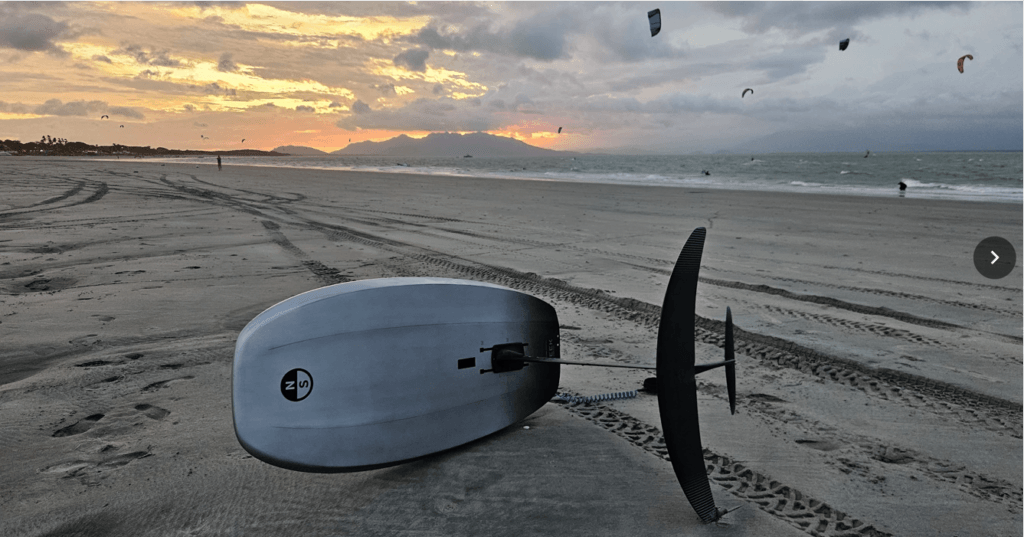
Imagine standing on a sandspit that juts into the Pacific like a pointing finger, a warm December wind hitting your face at 25 knots, and a turquoise lagoon stretching out in front of you so flat it looks photoshopped. You pump your wing twice, feel the foil lift the board beneath your feet, and suddenly you’re flying — not surfing, not sailing, not kiting. Something in between all three and better than any of them. That’s what wingfoiling in Punta Chame feels like, and once you’ve done it here, every other spot is going to feel like a consolation prize. This narrow peninsula on Panama’s Pacific coast has been quietly turning into one of the best wingfoil destinations in the Western Hemisphere, and the riders who’ve discovered it aren’t exactly rushing to share the secret. But the wind doesn’t lie, the water doesn’t lie, and neither does the line of smiling foilers gliding home at sunset every single day from November through April.
In a Nutshell
- Punta Chame is a thin Pacific peninsula about 90 minutes from Panama City with a protected flat-water lagoon that’s nearly purpose-built for learning and progressing in wingfoil
- The wind season runs from late November through early May, with December through March being the most consistent, delivering thermal and trade-wind combos that can hit 30+ knots
- World-class schools with certified international instructors operate right on the water, making it one of the safest and most efficient places on the planet to learn wingfoil from scratch
- The destination punches far above its weight for food and accommodation, with beach clubs, boutique surf hotels, and even glamping options steps from the launch zone
- Getting there is easier and cheaper than you think — direct flights to Panama City from most of the Americas and Europe make this a realistic one-week trip rather than an expedition
Reading Time: About 18 to 20 minutes. Grab a coffee, or better yet a Balboa beer, and take your time.
What Is Wingfoiling and Why Does It Matter Where You Do It
If you haven’t heard of wingfoiling yet, consider this your formal introduction to the sport that’s been stealing riders from kitesurfing, windsurfing, and SUP for the past five years. A wingfoiler holds an inflatable handheld wing — think a small kite without lines — while standing on a board equipped with a hydrofoil beneath it. The foil lifts the board out of the water as speed builds, and suddenly you’re hovering above the surface with almost zero drag, gliding with a silence and smoothness that’s completely unlike anything else.
The sport exploded after 2019, and it’s been growing faster than just about any other wind discipline since. The equipment has matured fast too — wings are easier to handle, foils are more forgiving, and boards have evolved specifically for wingfoil progression. It’s genuinely learnable in a week if the conditions are right. And that’s the key phrase: if the conditions are right.
Most places in the world have either good wind or flat water. Rarely both. And almost nowhere gives you consistent thermal wind that fills in every single afternoon like clockwork, over a protected lagoon with waist-deep water and a sandy bottom, in 28-degree air temperatures with a cold drink available fifty meters from the water’s edge. Punta Chame gives you all of it, and that’s why serious foilers are making the trip.

Punta Chame: What This Place Actually Is
Punta Chame is a thin, elongated peninsula in Panama Oeste Province, the westernmost part of the greater Panama City metro area. It’s about 90 minutes by car from Tocumen International Airport, and it sits at the entrance to the Chame Bay, which creates one of the most unusual wind and water setups you’ll find anywhere on the Pacific coast of the Americas.
The peninsula is maybe 500 meters wide at its broadest point. On one side you have the open Pacific with its swells and ocean breeze. On the other, you have the sheltered bay and lagoon — shallow, flat, and enclosed by sandbars. When the dry season trade winds blow in from the north and northwest, they funnel down through the isthmus and get compressed and accelerated, hitting the bay at consistent speeds that often range between 18 and 30 knots during peak afternoon hours. It’s thermally assisted, predictable, and remarkably reliable compared to most spots in the region.
The peninsula itself is unhurried. There’s no resort strip, no high-rise hotels, no nightclub scene. There are dirt roads through mangroves, fishing boats pulled up on the beach, a handful of kite and wing schools clustered at the far tip of the spit, a few restaurants serving fresh ceviche and cold beer, and a community of wind sports enthusiasts who have found their version of paradise and have absolutely no plans to leave. The vibe is a cross between a surf camp and a health retreat — athletic, outdoor-oriented, and genuinely welcoming to beginners and seasoned riders alike.
The Wind: What You Can Actually Expect
This is the part that matters most, so let’s be specific.
The Punta Chame wind season runs roughly from late November to early May. Outside those months, Panama’s rainy season dominates, the Inter-Tropical Convergence Zone sits overhead, and the consistent winds that make the spot special simply aren’t there. Within the season, conditions vary by month, and knowing the differences will help you plan a better trip.
December and January tend to be strong and slightly gusty as the trade winds are still establishing themselves. You can expect 20 to 30 knot afternoons, sometimes stronger, with some of the most exhilarating sessions of the season. This is great if you’re an intermediate to advanced rider who wants to throw it around, but it can be challenging for absolute beginners.

February and March are considered the sweet spot by most of the instructors and regular visitors at the schools. Wind comes in consistently, typically building from about 18 knots by midday and sitting comfortably in the 22 to 28-knot range through the afternoon. There’s less gustiness, the thermals are well established, and the water in the lagoon is almost always glassy by the time the wind drops in late afternoon. Temperatures are in the high 20s Celsius, the water is warm enough to make a full wetsuit completely unnecessary, and the skies are brilliantly blue.
April is the tail end — wind is still there but can be patchier, and the transition to rainy season begins to be felt. Still a good month, especially if you’re flexible and can chase the sessions.
The direction is predominantly north to northwest, which means the wind is cross-offshore over the lagoon — exactly what you want for safe foiling sessions. If you drift downwind, you drift toward shore, not out to sea. For beginners, this is a significant safety factor that instructors across the board consider when evaluating sites, and Punta Chame passes with flying colors.
Water temperatures hover around 26 to 28 degrees Celsius throughout the season. You’ll be riding in a rashguard or at most a shorty wetsuit for early morning sessions. Most people ride in boardshorts and a UV top and find it perfectly comfortable all day.
The Wingfoil Schools: Where to Learn and Who to Trust
The schools at Punta Chame have matured significantly over the past several years, and the two main operations that stand out are genuinely world-class in terms of instructors, equipment, and teaching methodology. This isn’t a place where you get handed some old gear and pointed at the water — the instruction here is structured, progressive, and backed by recognized international certifications.
Panama Kite Center operates right at the lagoon and holds the distinction of being the only IKO-certified kite and wingfoil school in the country. IKO — the International Kiteboarding Organization — sets the global standard for instruction quality and safety protocols in wind water sports. Their radio headset system, where instructors communicate with students directly while they’re on the water, is a genuine game-changer for learning speed. Instead of waiting to get back to shore for feedback, you get real-time coaching as you’re doing it. The difference this makes to progression is remarkable. They offer a range of wingfoil programs from absolute beginner multi-day courses to advanced foiling clinics, and their team is multilingual, covering English, Spanish, French, and German at minimum.
Machete Wing Surf Kite & Foil is another operation that has developed a devoted following among serious riders. Built by founder Itzek from the ground up on the sand, it’s described by returning visitors in terms that go beyond just a school — there’s a community and culture here that’s hard to put into words without experiencing it. The instruction is deeply personal, the community of students who come through is self-selecting for people who are genuinely committed to learning, and the approach to coaching combines technical rigor with an authentic love of the sport. The vibe, the food, the accommodations, and the riding all work together into something that feels more like a transformation retreat than a vacation activity.
For first-timers, a typical beginner wingfoil course runs three to four days of structured lessons, usually two to three hours of water time per day plus theory and safety briefing. Most students who commit fully to a four-day course and have the right conditions will be riding independently — foiling upwind and downwind with control — by the end. It’s one of the faster learning curves in wind sports, especially with expert instruction and flat water.
Bring your own equipment if you have it. If not, the schools have solid rental fleets covering a range of wing sizes and board volumes appropriate for different body weights and skill levels. First-timers: don’t skimp on volume. Bigger board, bigger wing, more patience, better results.
Beyond the Water: What Else Is Going On
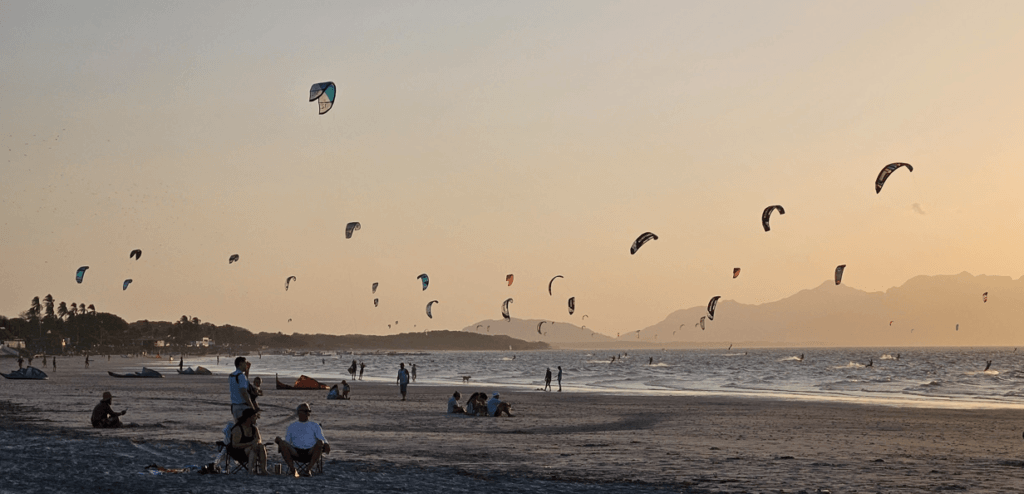
Punta Chame is not the kind of place that apologizes for being focused. It’s a wind sports destination first, and most of what happens here revolves around getting on the water. But a well-rounded trip to the peninsula involves more than just sessions, and there’s genuinely more to do than you might expect from a place this small and unhurried.
Mangrove kayaking and paddleboarding through the lagoon edges is a lovely low-key morning activity before the wind fills in. The mangrove channels are full of birdlife — herons, frigatebirds, ospreys — and the water is calm and clear. It’s also a good way to look at the foiling spot from a different angle and understand the geography of the bay.
Fishing is deeply embedded in Punta Chame’s DNA. The local fishermen work the bay and the surrounding Pacific waters for corvina, snook, and roosterfish, among others. Sport fishing day trips can be arranged through most of the hotels and schools. Even if you don’t fish, watching the pangas come in at sunset with their catch is one of the simple pleasures of being somewhere that hasn’t been completely recalibrated around tourist expectations.
Surfing is accessible too. The Pacific side of the peninsula picks up swells, and there are breaks within reasonable driving distance. Several of the schools and hostels organize surf trips to nearby points and beach breaks during flat wind days, which adds another dimension to the week if you get a low-wind day.
For the genuinely adventurous, the Chame Mountains and the nearby El Valle de Antón — a small town sitting inside the crater of an extinct volcano about an hour’s drive away — offer hiking, botanical gardens, hot springs, and one of the best weekend markets in the country. It’s entirely possible to build a trip that combines a week of foiling at the coast with a day or two of mountain exploration in the interior.
How to Plan a Trip to Punta Chame: Step by Step
Planning a wingfoil trip here is not complicated, but it pays to do it in the right order so you don’t end up with great flights and no accommodation at the school of your choice during peak season.
Step one is picking your dates. Aim for mid-December through late March for the best overall wind consistency and weather. February is the safest choice if you’re flexible, offering the most reliable conditions for a beginner course. School slots and accommodation at the top spots fill up, particularly from Christmas through mid-January and in February, so book at least two to three months ahead if you’re targeting peak windows.
Step two is booking your school package. Reach out directly to Panama Kite Center or Machete with your dates, number of people, skill level, and whether you need accommodation. Most of these operations offer packages that bundle lessons, rentals, and accommodation together, which is both cheaper and more convenient than booking them separately. Specify whether you’re a complete beginner, have done a lesson or two before, or are an independent rider looking to progress. This allows the school to assign the right instructor and size of equipment from day one.
Step three is flights. Panama City’s Tocumen International Airport (PTY) is well connected from the US, Europe, and Latin America. Copa Airlines in particular has extensive connections through Tocumen, and you’ll find direct or one-stop options from most major cities in the Americas, as well as from Madrid, Frankfurt, and other European hubs. Try to arrive in Panama City a day early, especially on international connections, to give yourself a buffer for delays and let your body clock adjust before your first session.
Step four is the transfer from Panama City to Punta Chame. The drive is roughly 80 to 100 kilometers west of the city on the Pan-American Highway, then turning onto the Punta Chame access road for the final 15 kilometers. This last stretch of road is famously rough — potholes, bumps, and very occasional passing spots — so a 4×4 is genuinely recommended, though not strictly required. Renting a car at the airport is the most flexible option and costs around $30 to $50 per day for a basic SUV from international chains like Budget, Hertz, or Europcar at Tocumen. The schools can also often arrange airport pickups for an additional fee, which removes the headache entirely.
Step five is money and daily logistics. Panama uses the US dollar, which means no currency exchange headache for American travelers and straightforward transactions for everyone else. The peninsula is mostly cash-based — a couple of restaurants and the schools accept cards, but carrying cash is wise. The nearest ATM is in the Chame town area, about 15 kilometers back toward the highway, so stock up before you turn off the Pan-American. Mobile data works reasonably well with a local SIM card from Claro or Movistar, both of which are available at the airport or in Panama City. Most schools and hotels offer WiFi.
Step six is packing. Bring lightweight, quick-dry clothing for on and off the water, quality sunscreen because the equatorial sun is relentless, a light shell or windbreaker for cooler December and January evenings, and a good pair of sandals for walking the dirt roads. A water bottle, electrolyte tablets, and reef-safe sunscreen are all appreciated both by your body and the lagoon ecosystem. Leave the wetsuit at home unless you’re coming in early December — a 1mm shorty at most.
Where to Stay: 5 Best Hotels and Accommodations in Punta Chame
Panama Kite Center is the single most convenient place to stay if you’re there primarily to ride. The accommodation options range from air-conditioned studios to glamping tents, and all of them are literally steps from the launch area and the flat-water lagoon. Staying here means rolling out of bed, checking the wind, and being in the water before breakfast. The on-site restaurant, Solé Beach Club, serves breakfast, lunch, and dinner with international options and ocean views. The community is inclusive and energetic, populated by people who are there for the same reason you are. Fast WiFi is available, which matters if you’re combining the trip with remote work. Prices are moderate and the package deals are genuinely good value.
Machete Wing Surf Kite & Foil Accommodation has something most wind sports hotels don’t: a soul. The founder has built an experience that goes beyond the physical structure of the place, and guests who stay here tend to talk about it in almost reverent terms. The food is consciously nourishing — the menu caters to vegans, vegetarians, and meat-eaters alike with real attention to what fuels athletes properly — and the accommodations are chic without being pretentious. This is a place where people return year after year, which says everything. Pet-friendly, multilingual staff, massage services, and a small market on-site.
Nomada Republic Hotel Punta Chame is a stylish container hotel that has become a genuine hit among the younger, design-conscious travel crowd. Built from repurposed shipping containers with an outdoor pool, terrace, and solid WiFi, it strikes the right balance between boutique cool and laid-back beach functionality. The restaurant serves solid food and the bar is a good place to debrief after sessions. It’s not right on the kite beach but it’s within easy reach and the atmosphere is consistently praised.
Punta Chame Club and Resort is the area’s most established resort-style property, with an outdoor pool, fitness center, restaurant, and bar. It’s a step up in formality from the kite schools’ accommodation — better suited to couples or travelers who want comfort and amenities in addition to wind sports access, or who are traveling with non-riding partners who need something to do during sessions. On-site dining, concierge services, and comfortable rooms make it a reliable choice.
Hotel Casa Amarilla et Restaurant is the warmest budget option in the area, a small, friendly property decorated with a mix of local charm and genuine care. It consistently earns some of the best guest ratings in the area for service and value. The on-site restaurant is genuinely good, the bikes are free to use, and the beach is within easy walking distance. For solo travelers or those who want to meet other people without the full school-package commitment, this is an excellent base.
Where to Eat: 5 Best Restaurants in and Around Punta Chame
Solé Beach Club is, simply put, the best dining experience in Punta Chame, and it happens to have one of the best ocean views in Panama. Located right at the water’s edge at Panama Kite Center, it serves international cuisine that spans the full dietary spectrum — vegan, vegetarian, pescatarian, and the full omnivore menu — with an emphasis on fresh ingredients, bold flavors, and generous portions. The seafood dishes are standouts, particularly the fresh ceviche and grilled fish. But what makes it special is the setting: a pool overlooking the bay, mountains in the background, the sound of wings overhead, and a sunset that has no business being as beautiful as it is every single evening. Come for dinner even if you’re not staying at the school.
Machete’s on-site restaurant has built a quiet reputation among the wind sports community as a place where food is taken seriously. The kitchen operates with a philosophy of fueling active people without sacrificing flavor or creativity, and the result is a menu that manages to be simultaneously health-conscious and genuinely delicious. The vegan and vegetarian options are particularly strong — not afterthoughts, but centerpieces of the menu. Tables fill up fast during peak season, and the communal dining atmosphere creates the kind of cross-cultural conversations you came to Central America for.
Gold Coast Brewing Company is a short drive from the peninsula and well worth the trip for anyone who appreciates craft beer. Run by enthusiastic expats, it serves some of the best burgers and pub food in the region alongside a rotating lineup of beers brewed on-site. It’s a great option for a rest day or a post-session Friday night when you want something that feels like a proper night out rather than beach shack dining. The crowd is reliably lively and the owners are genuinely interesting people.
La Cantina is the area’s go-to spot for Mexican food, and it has been attracting strong reviews from visitors who are frankly surprised to find Mexican this good anywhere near a beach in Panama. The tacos are built with care, the guacamole is made fresh, and the combination of spice, lime, and salt is exactly what your body wants after four hours of foiling in the tropical sun. Casual, unpretentious, and consistently good.
El Sandbar earns its place on this list by being exactly what you want from a beach restaurant in a place like this: relaxed, convivial, serving cold drinks and solid food with a view of the water and no particular interest in rushing you out the door. The ceviche is recommended by nearly everyone who visits. It’s the kind of spot you find at three in the afternoon thinking you’ll have a quick drink and a snack, and you look up two hours later and the sun is setting and you haven’t moved and that’s completely fine.
The Caribbean Connection: Why Panama Is a Two-For-One Trip
Panama occupies one of the most geographically peculiar positions on earth: a narrow bridge between two continents where two oceans are separated by barely 80 kilometers of land at the isthmus. If you’ve made the journey to Punta Chame for Pacific wingfoiling, it would be criminal not to take at least a few days to flip sides and experience the Caribbean coast as well.
The Caribbean side of Panama — primarily the Bocas del Toro archipelago and the San Blas Islands (officially the Guna Yala comarca) — is categorically different from the Pacific. Where the Pacific at Punta Chame is wind-whipped, dynamic, and charged with athletic energy, the Caribbean is languid, warm, luminously turquoise, and deeply, unapologetically beautiful. The San Blas Islands are among the most stunning in the world — 365 of them, mostly uninhabited, run by the indigenous Guna people, with zero resort development, perfect snorkeling, and the kind of silence that recalibrates something in you.
Bocas del Toro on the northwest Caribbean coast is more accessible and more developed, with a small town, excellent hostels and boutique hotels, surf spots, and a nightlife scene that’s entirely optional but there if you want it. It’s a four-hour bus ride and short water taxi from Panama City, or a one-hour domestic flight.
For the adventurous traveler who wants a proper wingfoil trip and a Caribbean adventure in a single visit, Panama makes this genuinely easy. Spend a week in Punta Chame learning and riding, then spend three or four days on the Caribbean before flying home. Panama City itself, with its remarkable Casco Viejo old quarter, world-class ceviche scene, and the Canal, deserves a day or two on either end of the trip.
The logistics are surprisingly smooth. Panama’s infrastructure — roads, domestic flights, internet, medical care — is significantly better than most of its Central American neighbors. Panama City’s airport handles most of the world’s major airlines. The US dollar simplifies everything. English is widely spoken in tourist areas. For European, North American, or South American travelers considering where to spend a week chasing wind, Panama is increasingly hard to argue against.
Is Wingfoiling in Punta Chame Right for You?
Let’s be honest for a moment.
Wingfoiling is not the easiest sport to get into. There’s a learning curve, and the first day or two can be humbling. You’ll fall. You’ll eat water. You’ll feel like everyone else is making it look effortless while you’re wrestling a wing the size of a dining table in knee-deep water. This is normal. This is how everyone starts.
What Punta Chame does is compress the learning curve as much as any place on earth can. The flat water means you’re not fighting chop. The consistent wind means you’re not waiting around on the beach. The expert instruction means you’re not teaching yourself bad habits that take months to un-learn. And the warm, shallow, sandy-bottomed lagoon means that falling is soft, safe, and entirely devoid of the consequence that can make learning at ocean beach breaks such an anxious experience.
If you’ve never tried it and you’re wondering whether a week here would be enough to get you genuinely riding, the honest answer for most people is: yes, with commitment. Four solid days of instruction followed by two or three days of free practice, and you’ll be foiling independently. Not perfectly — foiling perfectly takes years — but independently, with control, upwind and downwind, in a way that will make you immediately start planning your next trip.
If you’re already an intermediate rider, Punta Chame offers the conditions to take your riding to the next level. The consistent wind and flat water are perfect for working on upwind efficiency, jumping, pumping without wind, and all the technical progressions that separate competent riders from skilled ones.
And if you’re a seasoned foiler who’s never ridden the Pacific and wants to experience one of the continent’s great wind sports destinations — you already know you should go. You were just waiting for someone to confirm it.
Practical Information
Best time to visit: December through March, with February being the most reliable month for wind and weather.
How to get there: Fly into Panama City Tocumen International Airport (PTY), then drive approximately 90 minutes on the Pan-American Highway and the Punta Chame access road. Rent a 4×4 at the airport or arrange a transfer through your school.
Currency: US dollar. Carry cash as most local businesses are cash-only.
Language: Spanish is the primary language, with good English spoken at all the main schools and most hotels.
Visa: US, EU, UK, and most South American passport holders do not require a visa for Panama for stays up to 90 days. Check your country’s specific requirements before traveling.
Health: No vaccines are specifically required for Panama, though yellow fever vaccination is recommended if you’re traveling onward to certain South American countries. Comprehensive travel insurance including medical evacuation is strongly recommended for any adventure sports trip.
Safety: Punta Chame is a safe, low-crime area. The main risks for water sports travelers are sun, dehydration, and physical fatigue — all manageable with basic common sense.
Final Thoughts: Go Before Everyone Else Does
There’s a window with places like Punta Chame. A period where it’s beyond good — where the facilities are world-class, the crowd is manageable, the prices are reasonable, and the vibe is still real. Before the Instagram algorithm turns it into a scene, before the prices double, before the quiet dirt roads get paved and lined with souvenir shops.
That window is right now.
The wind is already there. It’s been there for millions of years, pouring down through the isthmus, finding the bay, flattening the lagoon. All the rest of it — the schools, the instructors, the restaurants, the community — has grown up around that wind because people who love it found it and decided to build something good.
You can be part of that. You can show up with an open mind and a willingness to fall, and in a week you’ll be flying. Not metaphorically — literally flying, a few inches above the surface of the Pacific, with the mountains of Panama on the horizon and a warm wind in your face and the feeling, which doesn’t come along very often in adult life, that you have just learned something genuinely new.
That’s what Punta Chame offers. And it’s worth every single hour of the journey to get there.
Support Ian with a TIP or Donation
Like what I do? Tips and donations like yours are what keeps this site alive. Its simple and quick, and makes a big difference.Offer me a Coffee !
Why not take 30 seconds to offer me a coffee and show your appreciation. A small gesture that goes a long way!